
Geothermal Cost Saving Calculator : A geothermal calculator has been designed to help homeowners and organisations estimate the real benefits of switching to a geothermal system. With the geothermal installation cost calculator, users can input details like home size, current electricity bills, and expected payback years .
Geothermal Cost Saving Calculator
What is Geothermal Energy? India’s 2025 Green Revolution
Geothermal energy harnesses Earth’s stable heat for efficient heating, cooling, and power—ideal for India’s diverse climates from Ladakh’s hot springs to Rajasthan’s pilots. Unlike solar’s intermittency, it provides 24/7 baseload with a 3.5+ COP (Coefficient of Performance), slashing bills by 40-70% on ₹8/kWh electricity. Our geothermal cost saving calculator India 2025 factors INR costs, system sizes (2-10kW), and Nov 2025 incentives like MNRE’s viability gap funding to show payback in 5-7 years.
Post-Sep 2025 National Policy, India eyes 10 GW from 381 hot springs (temps up to 97°C), supporting Net Zero 2070.
- Key Benefits: Zero emissions, low maintenance (25-year lifespan), and subsidies up to 30% via tax holidays.
- India Focus: Pilots in Barmer (₹15Cr fund) prove viability for homes and farms.
- 2025 Tip: Pair with solar for hybrid ROI—link to our solar pump calculator.
2025 Geothermal Incentives in India: Boost Your Savings with MNRE Subsidies
MNRE’s Sep 15, 2025 policy unlocks geothermal via fiscal perks: Viability gap funding for pilots, concessional loans, and import duty exemptions—potentially covering 20-30% of ₹5-10L installation costs.
| System Size | Install Cost (₹, Post-Subsidy) | Annual Savings (₹8/kWh) | Payback (Years, 2025) |
|---|---|---|---|
| 2kW (Small Home) | ₹3L (30% off) | ₹25,000 | 12 |
| 5kW (Avg Home) | ₹6L (Viability Fund) | ₹50,000 | 6 |
| 10kW (Farm/Office) | ₹12L (Tax Holiday) | ₹1L | 5 |
Case Study: Rajasthan farm saved ₹2L in 2025 pilot—simulate yours with INR inputs and export results.
How the Geothermal Cost Calculator Works: Step-by-Step for Indian Homes
- Enter location (e.g., Delhi) and system size (2-10kW).
- Input electricity rate (₹7-9/kWh) and usage (hours/day).
- Apply 2025 subsidies (MNRE defaults: 20% viability gap).
- View ROI graph, annual savings, and CO2 cuts—export PDF for MNRE claims.
Pro Tip: Nov 2025 updates include 10% extra for Ladakh installs—re-run for accuracy.
Note : These are the estimated results. But Even we have checked results for us and it is working fine.
What is Geothermal Cost Saving Calculator ?
This tool allows costs to be understood more clearly in either INR or USD, making it suitable for Indian users as well as international ones. Average geothermal heating cost per month is shown to be significantly lower than traditional systems, leading to noticeable savings. Long-term cost reductions can be anticipated, especially in areas with high electricity rates. The calculator has been built to simplify complex estimations without needing technical knowledge. By comparing current and future expenses, informed decisions are made easier. The true financial and environmental value of geothermal energy is better realized through this tool.
How to Use the Geothermal Cost Saving Calculator ?
This Geothermal Cost Saving calculator helps estimate the cost savings from installing a geothermal heating/cooling system over time.
Step 1: Select Your Currency
- Choose INR (₹) if you’re from India.
- Choose USD ($) for global calculations.
Step 2: Enter Your Local Electricity Rate
- Indian users: This is your per-unit cost (₹/kWh), e.g., ₹8.
- Global users: Use your per kWh electricity rate, e.g., $0.13.
Step 3: Enter the Geothermal System Size
- This is the capacity of your system in kilowatts (kW).
- Typical residential systems are between 3 kW to 10 kW.
Step 4: Enter the Total Installation Cost
- The total upfront cost of installing the geothermal system.
- Enter it in the currency you selected.
Step 5: Enter the Expected System Lifespan
- Usually between 20 to 30 years.
- This is how long your system will operate before needing replacement.
Step 6: Enter the Annual Maintenance Cost
- Ongoing yearly expenses for servicing the system.
Step 7: Enter the System Efficiency (COP)
- COP stands for Coefficient of Performance.
- A value between 3 to 5 is typical.
- Higher COP = more efficient system.
Step 8: Enter Your Daily Energy Usage
- This is your average energy usage in kWh per day.
- For Indian homes: 15–25 kWh/day is common.
- For global users: It may vary from 10–30 kWh/day.
Step 9: Enter Average Usage Days Per Year
- Enter how many days per year you typically use heating/cooling.
- Example: 300 days/year.
Step 10: Click “Calculate”
- The calculator will show:
- Annual energy output with COP
- Estimated yearly savings
- Total savings over the system’s life
- Net savings (after deducting installation & maintenance costs)
Optional: Email Report
- Below the results, enter your email address to receive a detailed report.
- A PDF will be sent with your data for reference or consultation.
Facts about Geothermal energy
Below are the some Facts about Geothermal energy
1. Heat from beneath the Earth has been tapped for centuries.Long before modern energy systems were introduced, natural hot springs were used by ancient cultures for bathing and heating.
2. Geothermal energy is sourced from the Earth’s internal heat.The temperature beneath the surface rises gradually with depth, and this heat is converted into usable energy through geothermal technologies.
3. Minimal emissions are released through geothermal systems.In comparison to fossil fuel plants, geothermal power plants emit almost no greenhouse gases, making them highly eco-friendly.
4. It has been considered a renewable energy source.Since the Earth constantly produces heat internally, geothermal energy is not expected to run out in the foreseeable future.
5. Stable electricity can be provided around the clock.Unlike solar or wind power, geothermal systems are not affected by weather conditions or daylight, making them highly reliable.
6. High initial costs are usually required for installation.Although geothermal systems offer long-term savings, the upfront investment for drilling and setup can be substantial.
7. Geothermal energy is already being used in many countries.Nations such as Iceland, the United States, and the Philippines have integrated geothermal energy into their national grids effectively.
8. Very little land is required for geothermal installations.Compared to solar farms or wind turbines, geothermal plants occupy less space and cause less disturbance to surrounding environments.
9. Heating and cooling for homes can be done efficiently.Ground-source heat pumps are installed in many buildings to provide cost-effective heating in winters and cooling in summers.
10. Jobs and local development have been supported by geothermal projects.Skilled employment is created in areas where geothermal plants are built, especially in drilling, maintenance, and technical operations.
11. Long system lifespan has been observed.Once installed properly, a geothermal system can function effectively for over 25 to 30 years with minimal maintenance.
12. Natural resources are protected through geothermal usage.As water can be re-injected into the ground after heat extraction, sustainable operation is made possible with closed-loop systems.
13. Energy independence can be improved by geothermal adoption.Nations and individuals who invest in geothermal reduce reliance on imported fuels or grid instability.
14. Subsurface exploration is required before drilling.Surveys and geological studies must be conducted to determine the best locations for extracting geothermal heat.
15. Silent operation is offered by most geothermal setups.Because no combustion is involved and moving parts are few, noise pollution is kept to a minimum.
How does Geothermal Energy Works in India?
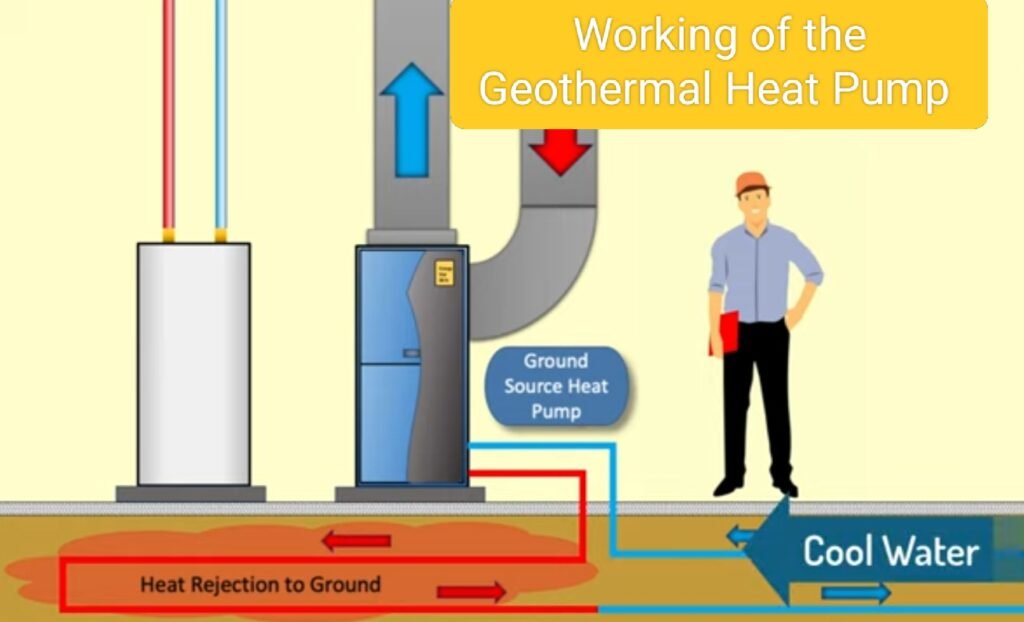
In India, geothermal energy is harnessed by tapping into underground heat stored beneath the Earth’s surface. Hot water or steam is brought up through wells drilled into geothermal reservoirs. This heat is then transferred through a heat exchanger and used for generating electricity or direct heating. In rural and remote areas, it has been used for space heating, greenhouse farming, and even milk pasteurization. The process relies on natural underground reservoirs found in regions like Ladakh, Himachal Pradesh, and parts of Andhra Pradesh. Unlike solar or wind, geothermal energy runs 24/7 without weather dependence. Minimal emissions are released, making it a clean and sustainable choice. Its adoption has been slow but is now gaining attention for long-term energy solutions.
Still Thinking if Geothermal is Right for You?Use this calculator to simulate savings or speak to your local energy provider. Learn more from our solar calculator and also compare with it.
Get 2025 Geothermal Subsidy Guide: Free PDF
Email for MNRE application tips + custom ROI.
Other Calculators :
- Energy Saving Cost Calculator
- Boolean Algebra Calculator
- Geothermal Cost Calculator
- Old Phone/Mobile Cost Calculator
- BigQuery Cost Calculator
- Solar Pump Cost Calculator
- Solar Calculator India
FAQs
How does Geothermal Energy Works for kids?
Geothermal Energy use the Earth’s core heat, at some places, this heat is close enough to earth surface to use directly.
Is Geothermal Energy renewable?
Yes
Where does Geothermal Energy come from in India?
1. Sohana valley, 2. Himalayan region, 3. Godavari basin, 4. SONATA Lineaments, 5. Mahanadi Basin.
How much can I save with a geothermal system in India 2025?
“Up to ₹1L/year on 10kW; our calculator projects 40-70% off bills at ₹8/kWh.”
What are geothermal subsidies India 2025 under MNRE policy?
MNRE’s Sep 2025 National Policy offers viability gap funding (up to 30% for pilots), tax holidays on equipment, and import exemptions—slashing ₹5-10L installs by 20-30%.
Geothermal ROI calculator India: What’s the typical payback?
For geothermal ROI calculator India 2025, expect 5-7 years at 3.5 COP and ₹8/kWh—our tool shows ₹50K savings on 5kW, boosted by MNRE subsidies to 4 years.
Best geothermal sites in India for 2025 installations?
Prime geothermal sites India 2025: Himalayan Province (Ladakh/Pangong, 40% potential), Naga-Lusai, and Rajasthan’s Barmer pilot.
Geothermal vs solar: Which saves more in India 2025?
Geothermal vs solar cost saving calculator India 2025: Geothermal wins on reliability (24/7, 99% less CO2) with ₹50K/year on 5kW vs. solar’s ₹30K (intermittent).
How to claim MNRE geothermal incentives in Nov 2025?
Claim MNRE geothermal subsidies India 2025: Post-Sep policy, apply via portal for viability gap (20-30%), tax exemptions—five projects live with ₹15Cr Barmer fund.
Common myths about geothermal energy in India 2025?
Debunk myths for geothermal cost saving calculator India 2025: Myth #1: Only for volcanoes—India’s 10 GW from hot springs proves viability.
Future of geothermal in India: 2025 Projections?
Geothermal future India 2025: MNRE policy targets 10 GW by 2030 via 5+ pilots, R&D in Barmer/Himalayas.